
Riparian Forests
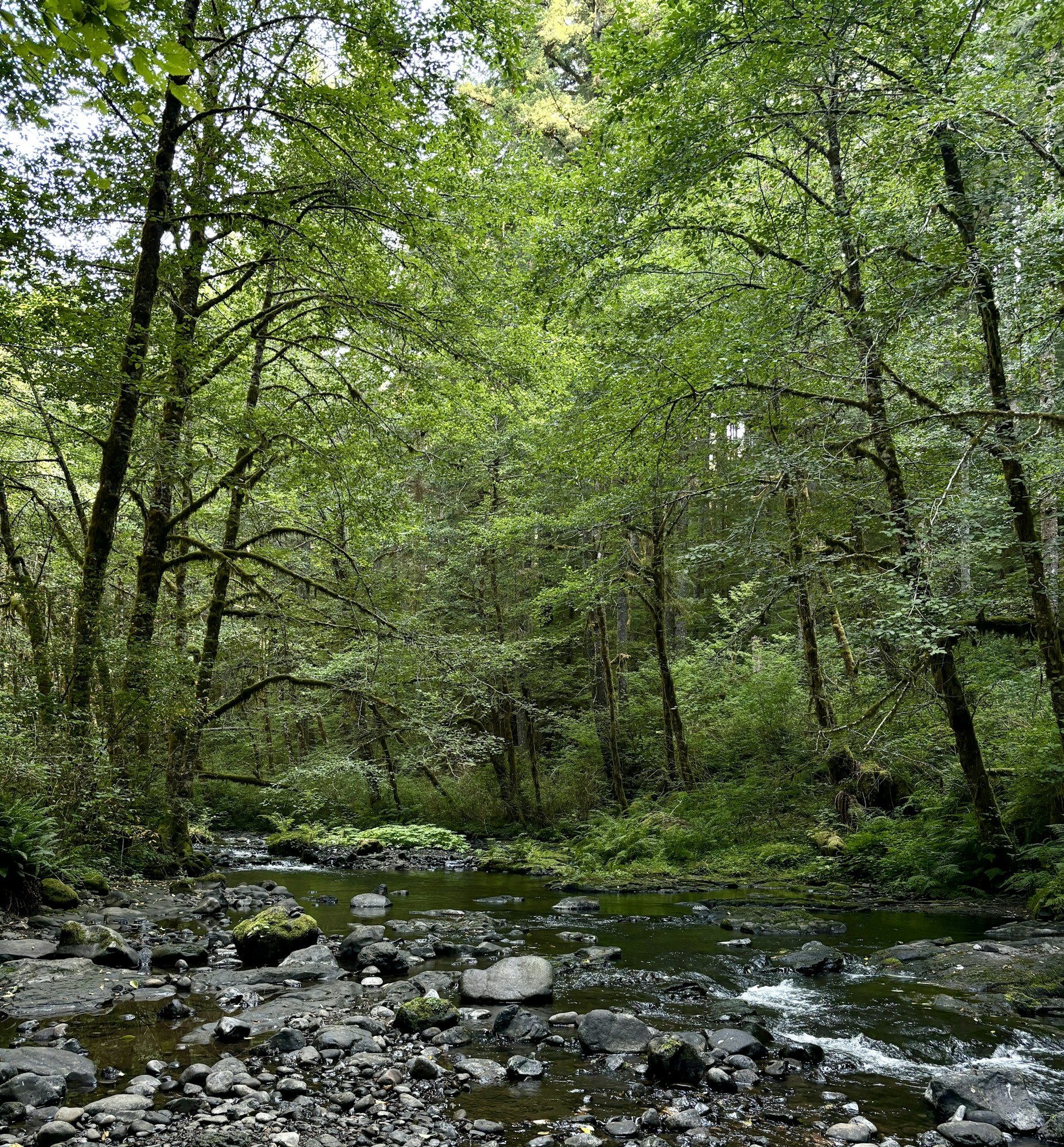
Riparian areas are defined by NRCS as ecosystems that occur along waterways and water bodies. They serve as the transition between aquatic and terrestrial zones. Properly managed riparian areas provide property owners and the environment with numerous benefits. For example, plant roots provide the bank with increased stability and minimize sediment runoff. Riparian buffers should be at least 25 to 100 feet wide depending on surrounding land uses. A healthy riparian area is highly vegetated with native shrubs and trees, shades the waterway, and contains an abundance of woody and organic debris.
Healthy Riparian Areas…
- Improve water quality.
- Reduce flooding.
- Decrease erosion.
- Protect fish habitat.
- Provide nutrients.
- Enhance wildlife habitat.
Riparian areas are defined as the strip of land bordering a stream, lake or wetland, plus the zone influencing this area (5). Riparian habitats also include springs, seeps, and intermittent streams, and many low elevation alluvial floodplains confined by valleys and inlets. (11) The riparian area can vary in width but primarily it functions as a transition zone between the edge of the water and the uplands. Riparian habitats are shaped and maintained through seasonal flooding, scour, and soil deposition. Riparian habitats vary from sparsely vegetated areas to cottonwood gallery forests (bottomland forests). Plant composition is influenced by elevation, stream gradient, floodplain width, and flooding events (5). Floods replenish nutrients, recharge groundwater, and reset successional processes. Throughout most of the state, riparian vegetation is mostly dominated by deciduous trees and shrubs, but conifers dominate riparian woodlands at higher elevations (10).
Flora
Riparian vegetation includes the trees and shrubs below or combinations of them:
| Western red cedar | Grand fir |
| Black cottonwood | White alder |
| Red alder | Big-leaf maple |
| Oregon ash | Bitter cherry |
| Arroyo willow | Pacific willow |
| Garry oak | Pacific dogwood |
| Vine maple | Currants |
| Swamp rose or Cluster rose | Snowberry |
| Douglas spirea | Blackberries |
| Raspberries | Thimbleberry |
| Salmonberry | Indian Plum |
| Osoberry | Twinberry |
| Red-osier dogwood | Willows |
Fauna
| Porcupine | Long tailed weasel |
| Skunk | Northern river otter |
| Bobcat | Black-tailed deer |
| Red tailed hawk | Sharpshin hawk |
| Mourning dove | Belted kingfisher |
| Northern flicker | Willow flycatcher |
| Swainson s thrush | Red eyed vireo |
| Many warblers | Western tanager |
Neo-tropical migrant songbirds pass through and some nest in riparian forests. (9)