
The Dirt | Weed of the Month September 2026 | Knotweeds (Fallopia sp.)
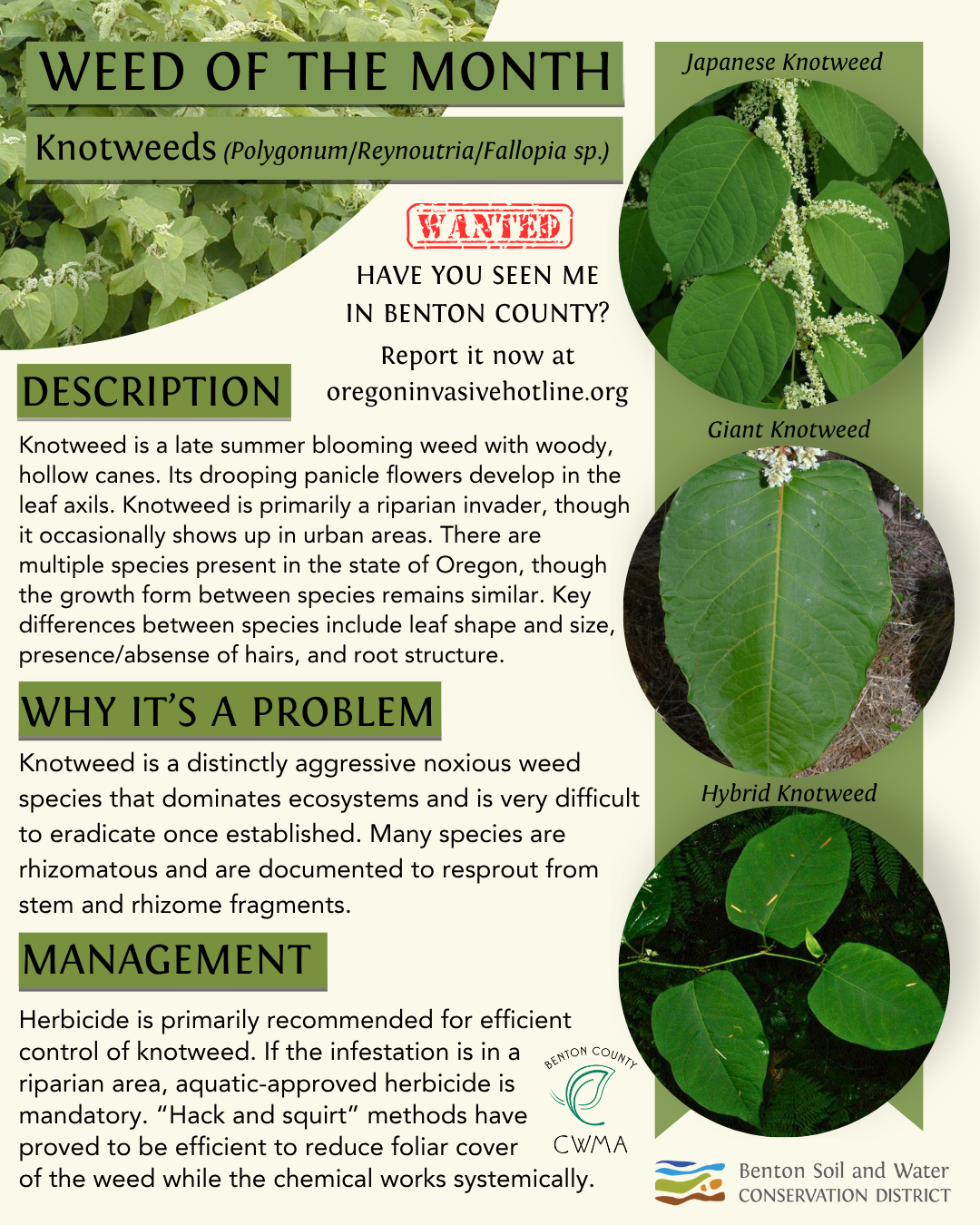

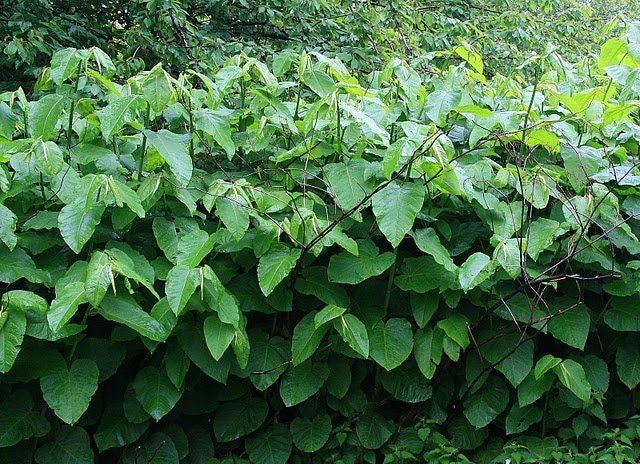


Our September Weed of the Month is Knotweed. Knotweed is recognized as somewhat of a taxonomic anomaly; it has been reassigned to several genuses over the years. You might know knotweed as Polygonum, Reynoutria, or most recently, Fallopia sp. There are several species of knotweed present in Benton County: Japanese knotweed (F. japonica), Giant knotweed (F. sachalinensis), and a hybrid species called Bohemian knotweed (Fallopia x bohemica). Most knotweed plants in Benton County occur along rivers, though it occasionally appears as an urban weed as well.
Despite there being multiple species, knotweeds have distinct characteristics that help with identification. This species tends to grow as a leafy shrub with heart-shaped leaves, hollow cane stems, and white axillary flowers. The size and shape of the leaves is one way to distinguish one knotweed species from another (see the comparison diagram in the photo carousel).
Regardless of the species, all knotweeds outside of their native range are extremely aggressive noxious weeds. This species is known to grow from vegetative fragments if mechanically disturbed, making chemical control the most efficient treatment option to reduce spread. Further, knotweeds are allelopathic, meaning they produce biochemicals that reduce the growth and overall fitness of other plants in their rooting zone.
Though it is classified as a B-listed weed in the state of Oregon, it remains a priority species to treat in areas that it has yet to invade. If you suspect you see knotweed growing in Benton County, say something. Report it now to the Oregon Invasives Hotline.
Keep reading
1. Dallas Drazan, Alan G. Smith, Neil O. Anderson, Roger Becker, Matthew Clark "History of Knotweed (Fallopia spp.) Invasiveness," Weed Science, 69(6), 617-623, (13 September 2021)
