
The Dirt | Weed of the Month January 2026 | Spurge laurel (Daphne laureola)

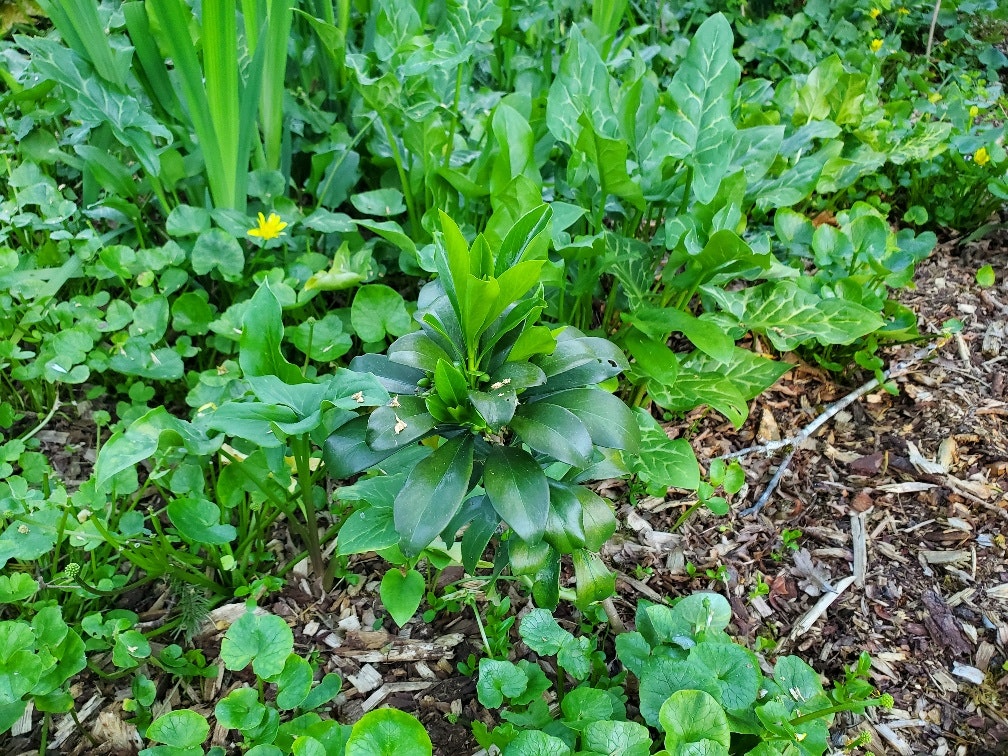


Our January Weed of the Month is Spurge laurel (Daphne laureola).
Background & Description
Spurge laurel is a woody evergreen shrub that is originally native to countries across Western and Southern Europe. It was planted as an oramental woodland species across the Pacific Northwest for decades before being designated a class B noxious weed in both Oregon and Washington state. It typically grows on upright stems but can occasionally be low-growing. The leaves whirl around the stem and are waxy in appearance.
Phenology
Being evergreen, this species retains its leaves year round. Yellow/light green flower clusters bloom in the leaf axils between January-March. Black fruits/berries develop in late March through April.
Impact
Spurge laurel grows well in the clay soil of the Willamette Valley. It particularly enjoys the understory conditions of oak wodlands. Left unmanaged, this species spreads prolifically through seeds. Birds eat the fruits and spread the plants locally. The sap of this species is also known to cause skin irritation, so wearing gloves while handling the plant is recommended.
Management
Manually digging out small infestations is best. The roots can penetrate quite deep in the soil, so be sure to dig between 6-12" down. For larger infestations, herbicide use is recommended for maximum control. Consult a local licensed herbicide applicator for chemical and rate recommendations.
Sources (Keep Reading)
- PNW Weed Handbook
- OSU Solve Pest Problems
- ODA Noxious Weed Profiles - Spurge Laurel
- Washington State Noxious Weed Control Board